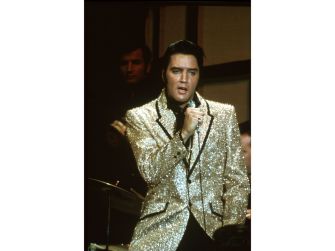
Elvis Presley's estate and music rights holders have sued AI music company Suno, accusing it of allowing users to generate songs that imitate the late singer's voice and using hundreds of copyrighted compositions to train its technology without permission.
The lawsuit, filed Friday, November 6, 2026, in the U.S. District Court for the Northern District of California, alleges that Suno violated Tennessee's ELVIS Act, a law designed to protect performers against unauthorized uses of their voices and likenesses, including AI-generated imitations. The complaint also seeks damages for alleged copyright infringement.
Elvis Presley Enterprises, Authentic Brands Group affiliates and several music publishers claim Suno's platform has produced synthetic recordings that closely resemble Presley's distinctive vocals. The filing cites video demonstrations of the technology generating what the rights holders describe as unauthorized imitations of his voice.
According to the complaint, Suno's safeguards against artist imitation are ineffective. The rights holders allege that users can obtain Presley-like vocals despite restrictions on prompts containing specific performers' names. They also claim that a recent prompt mentioning Elvis in song lyrics produced an imitation of his singing voice.
Suno disputes those allegations. The company says its platform is designed to help users create original music rather than reproduce existing artists' identities. It maintains that prompts naming specific performers or songs are restricted and that it uses screening technology to identify potentially infringing material.
The lawsuit invokes Tennessee's 2024 Ensuring Likeness Voice and Image Security Act, known as the ELVIS Act, which protects individuals against certain unauthorized uses of their voices and likenesses. The law also permits claims involving technology primarily designed to reproduce an identifiable person's voice or image without consent, subject to statutory requirements.
The rights holders argue that Suno's technology violates those protections by commercially exploiting Presley's recognizable voice. Whether the company's general-purpose music generator falls within the law's restrictions is among the questions the litigation could address.
The complaint separately identifies 859 copyrighted musical compositions that the rights holders allege were used without authorization. They include "Can't Help Falling in Love," "Don't Be Cruel," "All Shook Up" and "Return to Sender."
The publishers calculate potential statutory copyright damages of up to $128.85 million and seek more than $50 million under their publicity-rights allegations. Those figures represent amounts claimed in the lawsuit, rather than damages established by a court.
The new case follows an October copyright lawsuit against Anthropic, in which Presley music rights holders accused the developer of using copyrighted compositions to train its Claude artificial intelligence system without permission.
Suno is also defending a separate lawsuit brought by Jason Isbell and other musicians. The company recently asked a federal judge to dismiss that case, arguing that using artists' names to describe musical styles is protected speech.
On the same day as the Presley filing, Eight Mile Style, which controls rights to much of Eminem's catalog, brought a separate copyright lawsuit against Suno, alleging unauthorized use of its songs to develop AI technology.
The Presley rights holders are seeking monetary damages and other relief over the alleged use of his recordings and identity. The federal court has yet to determine whether Suno violated copyright law or Tennessee's protections against unauthorized voice replication.