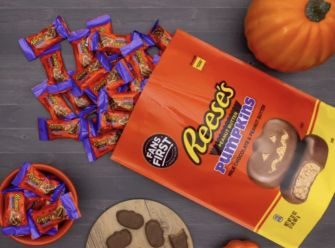
A federal judge in Florida has dismissed a proposed class action accusing The Hershey Company of misleading consumers with packaging that displayed Reese’s Halloween candies carved with faces and other designs that were absent from the actual products.
U.S. District Judge Melissa Damian ruled on September 19 that the plaintiffs failed to establish Article III standing, a constitutional requirement that limits federal courts to hearing live “cases” and “controversies.” The consumers argued they suffered an injury-in-fact because they purchased Reese’s products specifically for the decorative carvings, making the candies “worthless” without them. They also claimed they paid a price premium based on misleading images. Judge Damian found these allegations too speculative, explaining that disappointment over appearance does not amount to an economic injury. She noted that the plaintiffs still received edible candy that was not defective, unfit for consumption, or without value, and that the complaint contained no facts showing how the absence of carvings reduced the products’ worth or price.
The complaint, filed in May 2024, alleged violations of the Florida Deceptive and Unfair Trade Practices Act. It focused on Reese’s products shaped as pumpkins, ghosts, bats, and footballs that were sold without the decorative details pictured on the labels. Plaintiffs said they relied on the packaging and would not have purchased the products if they had known the designs were missing. They sought more than five million dollars in damages and attorney’s fees.
The filing also claimed Hershey updated its packaging in recent years to display detailed designs, which allegedly increased sales while misleading buyers. Plaintiffs cited consumer reviews, including YouTube videos where customers criticized the candies for failing to match the labels.
By 2025, two of the original plaintiffs voluntarily dismissed their claims, leaving Nathan Vidal and Eduardo Granados as the remaining named parties. Both had purchased Reese’s pumpkin products in Florida and said they would not have done so had they known the chocolates lacked the artistic carvings.
Hershey argued the lawsuit should be dismissed because customers received the candy they paid for and because packaging included disclaimers that images were a “decorating suggestion.” The company also noted that some packages showed partially eaten candy, which no reasonable consumer would expect to receive in a new package. Hershey maintained that disappointment over appearance alone is not a legally recognized injury.
The court dismissed the case without prejudice and denied an informal request to amend, ruling that any new complaint must be filed through a proper motion or as a separate case.